This blog's content was taken from episode 245, "7 Rules From an Investing Legend"
You can go check out the whole episode here:
| Spotify | Apple Podcasts | The Canadian Investor Podcast Network |
Best Flywheels
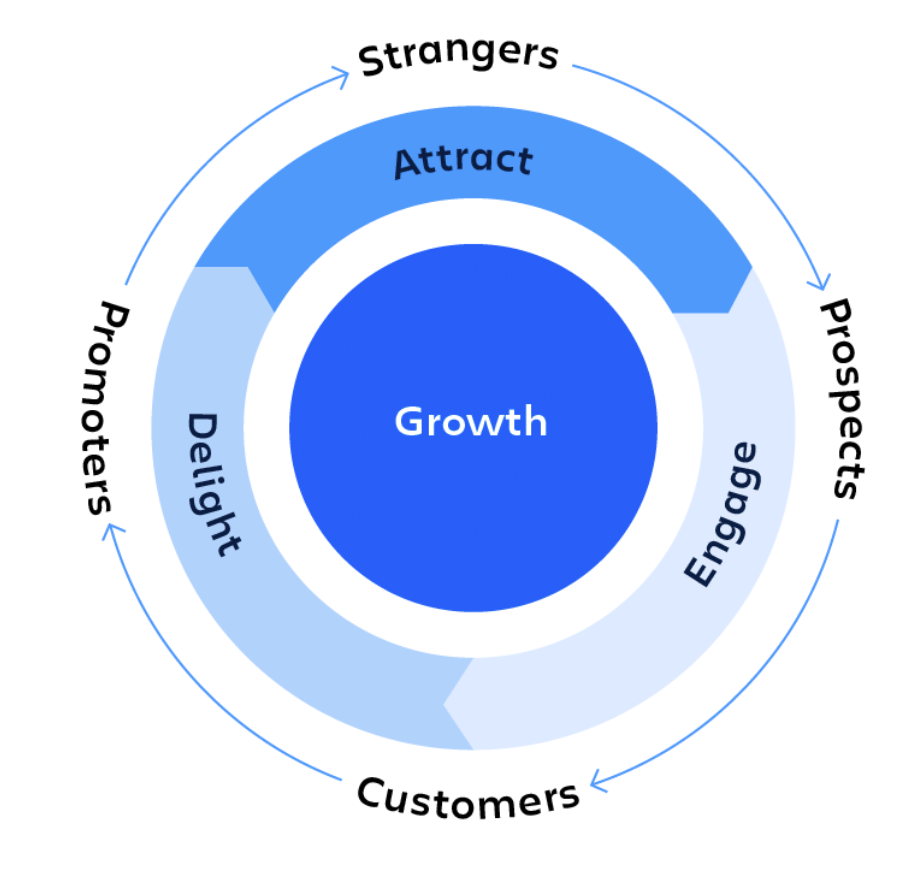 A flywheel is a network effect, but not just network effects. There’s an element of compounding as well. A network effect simply explains the phenomenon where more people using a product or service makes it better.
The easiest example of a flywheel is social media. The social media platform will get better as more people use it and as more people use it, more people will join.
That’s why a good flywheel will have an element of compounding. In other words, strangers become prospects, prospects become customers, customers become promoters, and then the cycle begins again when the promoters reach out to strangers on the company’s behalf.
A successful flywheel means that the company won’t have to engage in higher SG&A (Selling, General and Administrative) costs for marketing nor CapEx (Capital Expenditure).
Let’s take a look at some examples:
|
|
An organic and successful flywheel consists of attracting strangers who become engaged prospects and delighted customers.
7 Rules from an Investing Legend, Terry Smith
Terry Smith is the founder and chief investment officer at a large fund called Fundsmith. Fundsmith’s ethos is to buy great quality companies, don’t overpay, and then try to do nothing. The “try to do nothing” is the hardest part about a strategy like this because the need to tinker is what haunts investors of all sizes and experiences.
Fundsmith aims to do the following 7 things.
1. Buy and hold.
“We should treat our investment career like one of those tickets you get for a tram, which is spent once it’s been punched 20 times, as that’s the number of great investment ideas we’re likely to be able to find at a price we can justify investing in.”
2. Invest in high quality companies that can sustain a high return on capital employed, in cash.
3. Invest in businesses whose assets are intangible or difficult to replicate.
4. Avoid companies that need leverage.
“The companies may well have leverage, but they don’t require borrowed money to function.”
5. Must have growth potential.
6. Only when we believe the valuation is attractive.
“We have seen many investors who invest in quality companies, yet still underperform because they consistently overpay for those investments.”
7. Not be fixated on benchmarks.
“Even a year is a short period to measure results by.”
“A year does not have its foundations in the business or investment cycle. It is, in fact, the time it takes the earth to go around the sun and is therefore of more use in studying astronomy than investment.”